
In Search of Joy
People say, "joy is resistance," but what even is it?
I came to Substack looking for space to put my words. To practice stringing them together in sentences that would scratch the ‘must write’ itch that’s been there my whole life.
It’s a hard thing to live with, that itch, because it never goes away. Like any itch, when I scratch it, it spreads and demands more attention. That’s probably a good thing, when I have time and energy to write anyway. But it’s hard when I’m exhausted from surviving in a world that is actively trying to erase my value. I parent, I learn, I sleep and eat and shit, and I try to remember that, despite the vitriol coming out of the governments (ours and other countries’), I have people who love me for me and know that what the MPs are saying is bullshit.
Meanwhile, the need to write gnaws at me. Persistent. Demanding.
Then that demanding kicks off my demand avoidance. It’s a whole ride.
But sometimes. Sometimes. There is space for me to scratch words into paper. This is how I write poems. Scrawls of words, strike-throughs, approved phrases getting re-written, massaged, massaged, until, well, until it’s something and we’ll call it a poem.
I never considered myself to be much of a poet. In fact, once I wrote a poem about being really bad at poetry. My lecturer at uni (shout out to Bryan Walpert) would say, “poetry has to have a centre of emotion.”1
Laughs in alexithymia exacerbated by chronic depression, which messes with your emotional experience as well.
As I’m unmasking and practicing being in my body (ie. in my feelings), more and more I can now sometimes smoosh words together in ways that evoke emotion.
I’ve discovered I can write despondent well. If there was a PhD in Melancholy, I’d get that doctorate no sweat. But what about those other feelings, like… joy? How do you write a poem about joy?
How do you feel joy?
Honestly, it turns out I didn’t even know what joy is. I was talking about it with someone and they described it and I was all, wait, what?
Definitions please!
My computer’s dictionary gives me:
joy | dʒɔɪ |
noun [mass noun]
a feeling of great pleasure and happiness
Which is kinda where I was at with it. Joy is BIG and INTENSE, like anger and grief. It will take over your system but this time it will feel good.
My How do I Feel? emotion cards suggest that what I’m imagining there is ecstasy (“an overwhelming state of joy or intense delight”). The definition on the joy card didn’t help me much more than the dictionary’s, though at least there was beautiful art and some trigger examples:
Joy
An intense feeling of happiness or delight. You might feel it when you succeed at something, help others, receive thanks or have something lucky happen. Often joy can come unexpectedly, when something exciting or wonderful happens.2
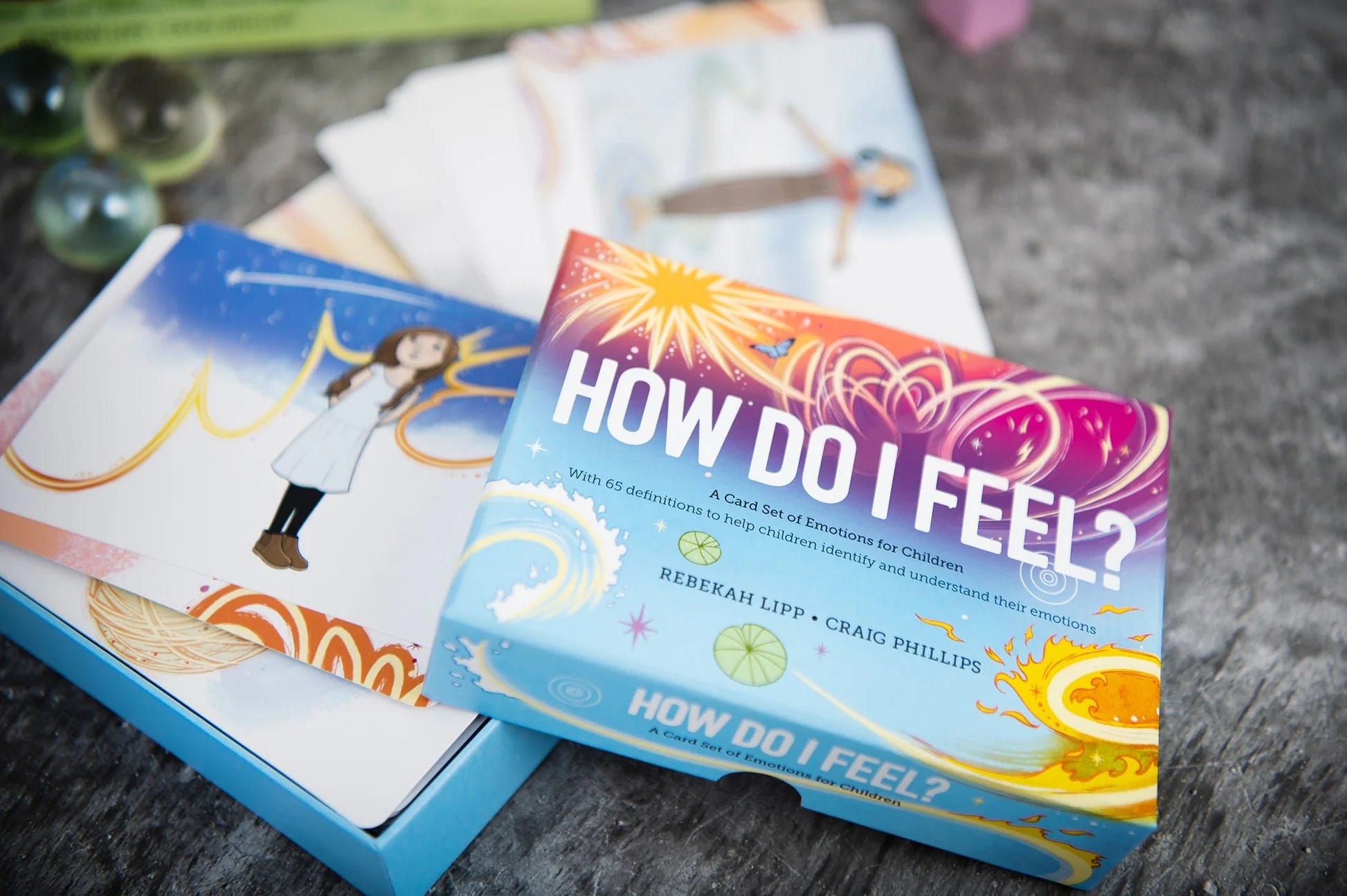
Yet I’m still left feeling dissatisfied. Joy is happiness/joy is delight/joy is pleasure⏤just dialled up more?
I turned to Brené Brown’s beautiful book, Atlas of the Heart. She spends over two pages trying to capture joy and discern it from happiness.
“Based on our research, I define joy as an intense feeling of deep spiritual connection, pleasure, and appreciation.”3
I think it’s the sense of connection that was missing from the first two definitions. We need connection!
So joy is kind of a soup of enjoyable emotions and sensations, rich enough to overwhelm anything else going on for you.4 All simmering in a broth of connection and safety.
Maybe?
Then there’s “autistic joy” which I haven’t looked into yet.
My struggle to wrap my head, and words, around joy is somewhat explained when Brown paraphrases Matthew Kuan Johnson:
…people find experiences of joy hard to articulate… the very nature of joy pushes the boundaries of our ability to communicate…5
I suspect this might be because when we feel joy we are IN it. The more I learn to identify joy in my body, in my life, I’m finding that the ‘observer’ part of the brain is so caught up in observing and “appreciating” the experience, that there’s no space for it to observe the joy.
As soon as my attention moves away from the antecedent and towards the experience, it fades: I become aware of the echoes of joy, not the joy itself.
Even the echoes of joy are hard to capture in words.
One day I was exploring the concept of joy at my friend’s house. We were sitting in the autumn sun, vibing with good music, both focused on our own projects. I realised (ironically perhaps) that I was feeling joy in that very moment.
The realisation made me cry, in all its awkward I’m-at-a-friend’s-house-being-a-mess glory.
I’m not sure where I’m going to land with all of this but I’ve made some observations. Joy comes from a place of safety, connection and mindfulness. Safety, I’ve talked about before and don’t want to harp on about it. Connection, I don’t mean with other people necessarily, we can feel connected with ourself, with the world, with whatever spiritual being/s you believe in, with the animals and trees and sunlight warmth. And mindfulness, which has become such a loaded word that I don’t even want to elaborate. Suffice to say, if you’re not in yourself and the world in the present, joy will pass you by.
As I try to nurture safety, connection and mindfulness, I am also trying to plant seeds for joyful poetry⏤joyful writing in general.
English doesn’t lend itself well to “positive”6 affect. We have more words for sucky emotions than for pleasurable ones and they’re easier to identify and connect with: they really feel more concrete. Anger, fear, sadness: they feel solid to me. We all know what these look like. And when we talk about empathy we’re focused on connecting within spaces of suffering.
But joy relies on connection too.
Perhaps that’s why it’s so hard to see in the world. Perhaps that’s why it feels so amorphous to me. Joy was never modelled to me. I am not sure I’d be able to identify it in another person. People are happy at times, sure. But happy and connected and in the moment? That seems a bit like a unicorn.
Maybe joy is too personal, too internal. Perhaps we can see smiles and laughter, but we can’t see into a person enough to know if they’re really joyful.
Or maybe I’ve just not been looking. Maybe now I’ll experience the Baader–Meinhof phenomenon (or frequency illusion) and notice people experiencing joy everywhere.
That would be nice.
In the meantime, I will try to create the foundation for joy to occur. And I’ll keep attempting to write joyful words.
Feel free to drop your interpretations or experiences of joy in the comments.
I don’t want to hide work behind a paywall for a range of reasons. If you’d like to support me in my endeavour to live fully, you can support me in various ways including donating via my Ko-Fi page.

Paraphrased from my memory of class.
These beautiful cards are created by Rebekah Lipp and Craig Phillips, and published by Wilding Books.
Atlas of the Heart, p. 205
I have so much to say about “spiritual connection” that it really needs its own post.
ibid.
Emotions aren’t “positive” or “negative”, though what people do with those emotions certainly can be. They’re just emotions. Some are enjoyable, some are horrific. They all serve a purpose.
Reading this, I felt the familiar tug of recognition—the way joy can feel like a rumour rather than a resident, especially for those of us who’ve spent decades in survival mode. I know the itch to write, the push-pull of wanting to catch a feeling before it fades, and the paradox that joy dissolves the moment you turn to observe it. For me, joy only arrives when safety, connection, and presence align—a confluence so rare it feels like a glitch in the timeline. And yet, when it does appear, it reorders the map, reminding me that the now can hold more than vigilance or loss.